Entity-based SEO and knowledge graph work can feel abstract, but they have clear, practical consequences for how search engines understand and display your content. This guide helps you decide where entity work will move the needle, run a quick readiness audit, and follow a prioritised, tactical implementation plan for content, markup and linking you can apply within weeks.
What entity-based SEO and the knowledge graph actually change for rankings
Search engines have moved from pure lexical matching, which looks for exact words and phrases, to systems that recognise entities, which are discrete things such as people, products, organisations and concepts. Three practical consequences follow.
Better matching beyond exact phrases. Lexical systems reward exact keywords. Entity-aware systems match on the underlying thing. For example, a page that reliably identifies “Mini Cooper S 2015” as the same product across reviews, spec sheets and accessories will be considered relevant for queries mentioning shorthand, variants, or comparisons even when the exact phrase is not repeated.
Inference of relationships. If a site consistently states that Product A is an accessory for Product B and both are linked to authoritative sources, search engines can infer the relationship and serve combined results, such as bundled rich snippets or grouped product carousels, rather than treating pages as unrelated keyword matches.
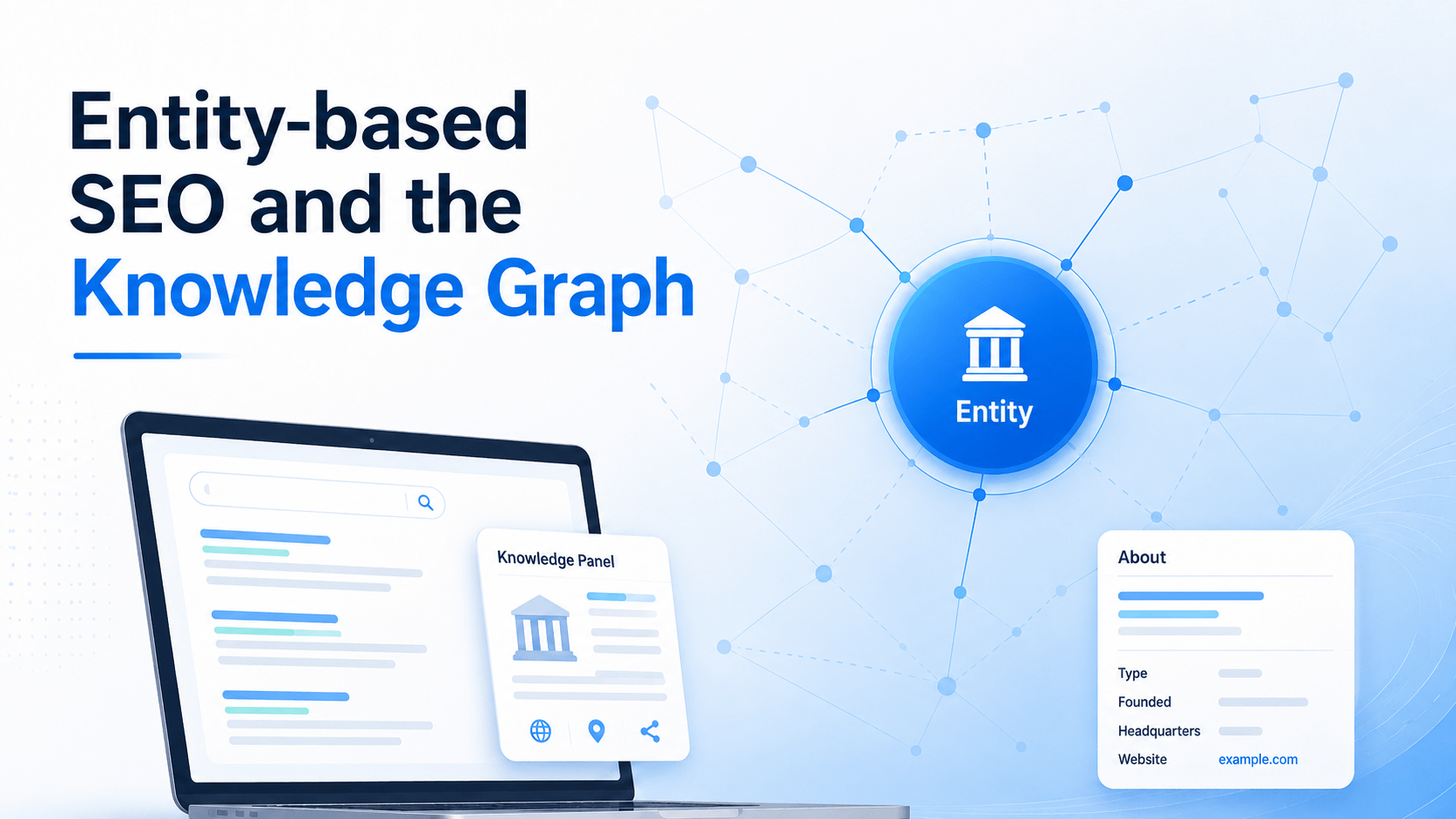
Richer SERP features and content grouping. Entities feed knowledge panels, featured snippets, and grouped results. If an entity record for your brand or product is strong, search results can surface fact boxes, images, or a carousel that pulls from multiple pages, increasing visibility even when organic rankings for individual keywords remain unchanged.
Why this matters for content
Entity-aware ranking places higher value on factual, well-sourced content that clearly identifies who or what a page is about. That means concise facts, attributes and relationships matter more than thin pages optimised only for repeating target phrases. Authoritative content that aggregates repeatable facts, cites provenance and uses consistent naming is easier for engines to link into broader entity records, which can improve visibility across related queries.
When it helps most
Entity work gives an edge where identity and relationships are central to user intent. Prioritise it for:
- Brand and corporate pages where a knowledge panel or brand entity will improve trust.
- Product families and SKUs that share attributes and accessories.
- Expert content and authorship, such as medical, legal or technical advice where provenance and author identity matter.
- Complex, multi-entity topics like travel itineraries, events with speakers and venues, or comparison hubs.
How search engines build and use knowledge graphs
Search engines build knowledge graphs by extracting entity mentions, linking them to identifiers, and aggregating structured and unstructured signals into entity records. The pipeline, simply, looks like this: extraction, disambiguation, enrichment and ranking.
- Extraction. Text, metadata and structured data are parsed for named entities. Natural language processing tags candidate entities and attributes.
- Disambiguation. Systems match mentions to canonical identifiers, using signals such as context, aliases and external sources to decide which real-world entity a mention refers to.
- Enrichment. Structured sources such as Wikipedia and Wikidata, crawlable site data, and authoritative third-party mentions feed attributes, images and relationships into the record.
- Ranking and use. The consolidated entity record helps the engine infer relevance across queries, generate knowledge panels, and choose which pages supply facts in rich results.
Example entity record, simplified
- id: organisation:acme-co
- name: Acme Co
- aliases: Acme, Acme Corporation
- type: Organisation
- attributes: founded 1998, HQ London, CEO Jane Smith
- related entities: product:widget-x, person:jane-smith, location:london
Signals that update this record are structured data on acme.co, citations from news and industry pages, and consistent author pages.
Entity canonicalisation
Canonicalisation is the process of treating different mentions and variants as a single entity. Without it, “Acme Co”, “ACME”, and “Acme Corporation” may be split into separate records, diluting authority. Use persistent identifiers you control (for example, a canonical company page URL), consistent metadata and schema name fields, and explicit alias properties to help engines collapse variants into one record.
Signals that strengthen an entity record
The most practical signals to focus on are:
- Structured data markup for the entity (JSON-LD using schema.org types).
- Clear, factual on-page statements such as founding date, specs and authorship.
- Authoritative external mentions from trusted sites and directories.
- Consistent site-level metadata and canonical URLs.
- Internal linking that ties entity pages together with predictable anchor text and context.
Readiness audit: prioritise entity work for your site
Use this pass/fail checklist on your top candidate pages. For each page, mark Pass or Fail and add a short action cue.
- Page clearly focused on a single entity (Pass/Fail). Action: split or rewrite pages that muddle multiple entities.
- Page uses a canonical URL and consistent title for the entity (Pass/Fail). Action: canonicalise names and fix redirects.
- JSON-LD present and valid for the primary entity (Pass/Fail). Action: add or correct JSON-LD.
- Page includes disambiguating facts (dates, specs, ISBNs, SKUs) (Pass/Fail). Action: add a facts block.
- Internal links point from related pages to this entity page with descriptive anchors (Pass/Fail). Action: add 2 to 5 contextual links.
- External authoritative mentions exist (Pass/Fail). Action: identify top targets for outreach or citation.
- Author or organisation identity pages exist and are linked (Pass/Fail). Action: add author page and link to it.
Quick priority matrix
Score each page 1 to 5 on business value, existing authority, and implementation effort. Multiply business value by authority, then divide by effort to rank. High score pages are the ones to optimise first; low score pages can wait or be deprioritised.
Immediate low-effort wins
- Add or fix JSON-LD name, description and url fields on entity pages.
- Canonicalise variant names to a single label in metadata and schema.
- Add a compact facts/specs block near the top of product or organisation pages.
- Create or link to an author or organisation profile page.
- Fix broken internal links and replace vague anchors with descriptive ones.
Step-by-step: build and strengthen your entities (content, markup, linking)
- Map entities
- Inventory your primary entities: brand, products, authors, locations.
- Record unique identifiers you control, such as canonical page URLs or SKU codes.
- Clean content
- Add a standard facts block for each entity: official name, aliases, type, attributes and one-line description.
- Remove contradictory statements and ensure the same attribute is presented consistently across pages.
- Add structured data
- Implement JSON-LD schema.org markup for the entity types you mapped.
- Include properties for name, url, sameAs (for authoritative profiles), identifier and mainEntityOfPage where relevant.
- Express relationships
- Use internal linking with contextual anchors and schema properties such as offers, isPartOf, or author to show relationships.
- Secure a small number of reputable external mentions that state the same facts or link to the canonical page.
- Iterate and record provenance
- Where facts come from third-party sources, add a concise citation or link that provides provenance for key claims.
Build an entity map
Record for each entity:
- Controlled id: canonical URL or SKU
- Primary label and aliases
- Type: Organisation, Product, Person, Event, etc
- Top attributes: dates, specs, prices
- Top related entities and relationship type
- Priority score (business value x authority / effort)
A simple CSV row is all you need to start.
Schema and structured data priorities
Prioritise these schema types for most commercial sites:
- Organization for corporate identity, with sameAs links to official profiles.
- Product for SKUs and product pages, including sku, brand and offers.
- Person for authors and key personnel.
- Article or WebPage with mainEntity set to the entity when a page is primarily about one thing.
Use identifier properties and sameAs to link to Wikidata or other canonical sources where possible. To express relationships, include nested objects such as hasPart or relatedLink and use @id to reference other entity URLs on your site.
Content patterns that help entity recognition
- Facts and specs blocks at the top of pages make attribute extraction reliable.
- Consistent naming and a short ‘About’ paragraph that states the entity plainly.
- Disambiguation notes when names are shared between entities, e.g. “Not to be confused with…”
- Repeatable phrasing for attributes so NLP models see the same structure across pages.
How to measure impact and avoid common pitfalls
Track changes with a simple measurement plan tied to realistic KPIs and short experiments.
- KPIs: impressions and clicks for brand and related queries, occurrence of knowledge panels or rich snippets, click-through rate for pages supplying facts, visibility for related entity queries.
- Experiment design: change a set of pages, hold a matched control set, and measure pre and post windows of 4 to 6 weeks, longer for larger sites.
- Avoid mistakes: do not over-tag pages with irrelevant schema, do not use inconsistent labels across pages, and never substitute quality content with markup alone.
Monitoring signals
Watch these tools and signals:
- Google Search Console: impressions and queries, plus the Rich Results and Coverage reports.
- Structured data testing: use a schema validator or the Rich Results test to ensure JSON-LD parses.
- SERP observation: manual checks for knowledge panels, carousels and fact boxes that reference your domain.
- Backlink and mention tracking: monitor new authoritative mentions that reference your canonical entity pages.
Experiment template
- Select 10 similar pages to modify, and 10 matched control pages.
- Baseline: collect 4 weeks of impressions, clicks, and rich result instances.
- Implement: add JSON-LD, facts blocks and 2 internal links per page.
- Post period: measure the same KPIs for 4 to 6 weeks.
- Analyse: compare change versus control, check for SERP feature gains and validate that content quality was not reduced.
Common low-return changes include adding schema where page content does not support the claims, or using many different labels for the same entity so signals are fragmented.
Next step: run a 2 to 4 hour entity readiness check on your top 10 pages. Map core entities, verify structured data, and add two disambiguating facts. If you want a focused audit or a one-page entity-audit template, contact STRINGERSEO or download their audit template to get a rapid prioritised plan.