An SEO consultant is a specialist who diagnoses why your site is not showing up in search, sets priorities to improve visibility, and either guides or carries out work across technical, content and link signals. They run audits, build a prioritised roadmap and measure outcomes. Expect advisory and delivery work that commonly takes months to affect organic performance, not instant results.
What an SEO consultant actually does for your business
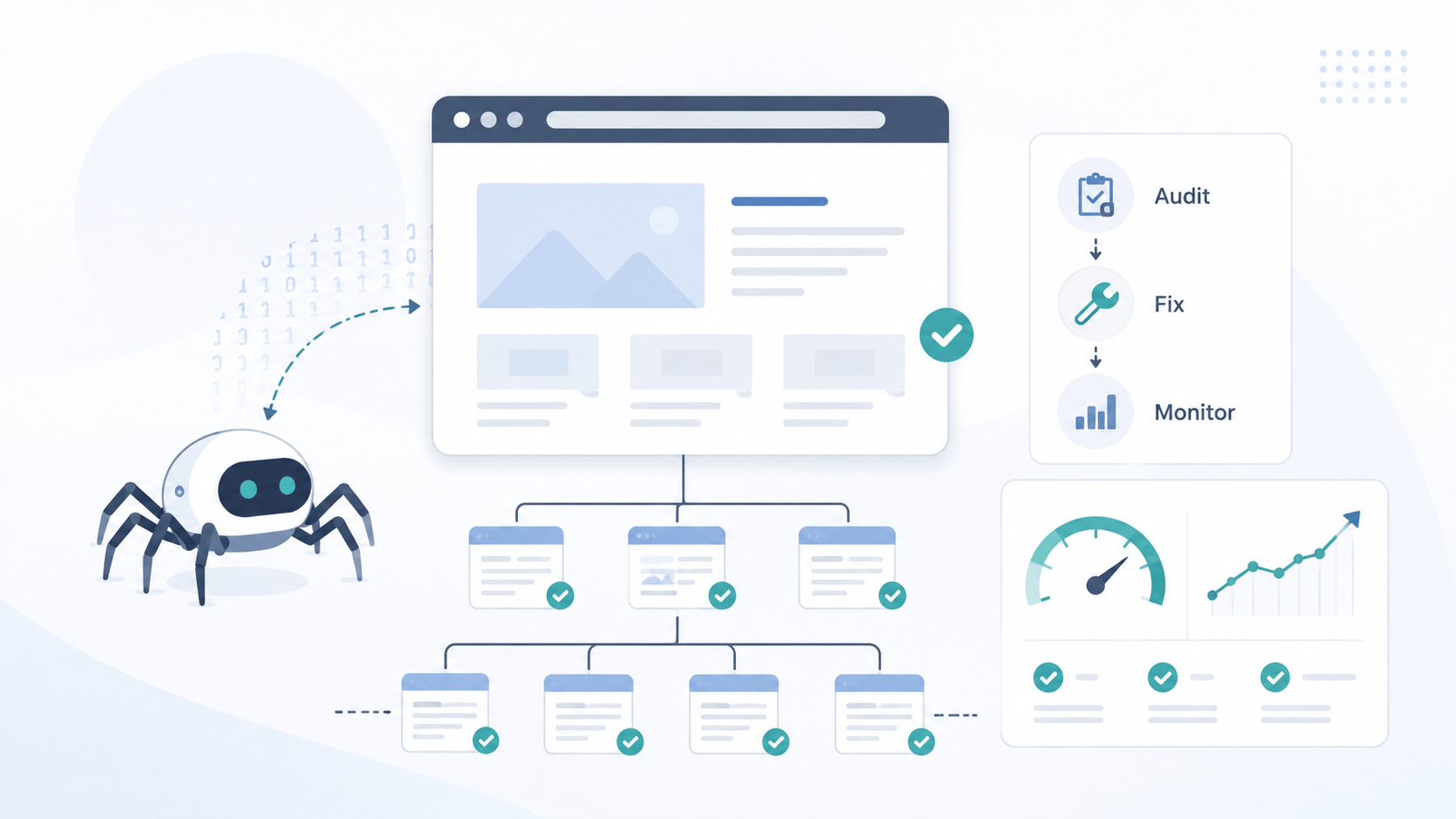
- Site diagnosis and audits, including crawlability, indexation, site speed and mobile behaviour. Value: finds the technical limiters that stop search engines from seeing and ranking your pages.
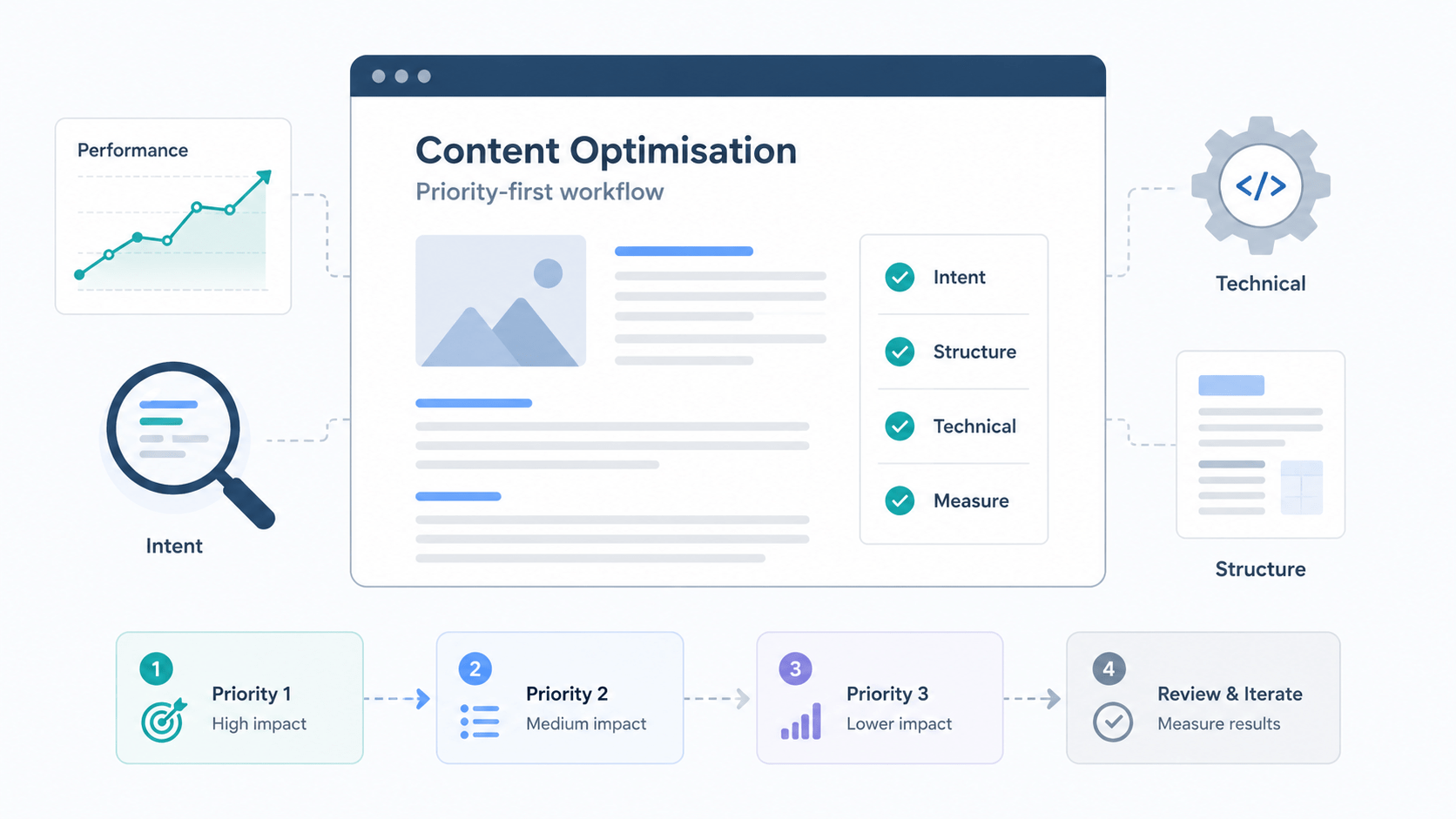
- Strategy and prioritisation, producing a roadmap tied to business goals and commercial opportunity. Value: focuses resources on changes that move the needle.
- Technical fixes and site health, like resolving redirect chains, improving structured data and advising on site architecture. Value: reduces wasted crawl budget and improves user experience.
- Content planning and optimisation, from keyword research to content briefs, on-page optimisation and template guidance. Value: increases relevance for target queries and improves conversion potential.
- Link and reputation work, assessing backlink profile quality, outreach strategy and digital PR opportunities. Value: strengthens authority signals that support rankings.
- Measurement and reporting, setting success metrics, tracking organic traffic, visibility and conversion and running regular performance reviews. Value: shows whether changes deliver business outcomes.
Day-to-day vs strategic work
Tactical tasks are specific actions such as fixing broken links, updating meta tags, rewriting a product page or implementing schema. These are repeatable, often short pieces of work with immediate technical outputs. Strategic work sits above the tactics, for example defining a 6 to 12 month content roadmap, aligning SEO with product or paid media plans, and getting stakeholder buy-in for site-wide changes. Good consultants balance both, delivering quick fixes that reduce risk while creating a plan that shapes longer term growth.
How to tell if you need an SEO consultant now
Signs you should hire external help immediately:
- Organic growth has stalled or declined and in-house attempts have not fixed it.
- You are planning a major redesign, migration or platform change that could damage search visibility.
- There is little or no in-house SEO expertise, or your team lacks capacity to run audits, implement fixes and measure impact.
- Your site has technical issues you cannot diagnose, such as indexing problems, severe speed issues or large-scale duplicate content.
Consider hiring later if:
- You have a small site with simple needs and someone in-house can manage basic on-page updates.
- You are still validating product market fit and cannot commit to a months-long optimisation timeline.
Decide between hands-on delivery and strategic advice:
- Hire for delivery if you need the consultant to implement changes and you lack developers or content resource.
- Hire for strategy if you need a roadmap, prioritisation and stakeholder alignment but plan to execute internally.
Quick self-check
Answer yes or no to these prompts. Three or more yes indicates hiring an external consultant is likely the right move.
- Have you seen month-on-month organic traffic decline for three months or more?
- Are you planning a site migration, CMS change or major redesign within six months?
- Does your internal team lack experience in technical SEO, content planning or link building?
- Do you need measurable, business-aligned targets rather than ad hoc fixes?
How to evaluate and choose an SEO consultant
- Experience and results. Look for demonstrable outcomes, not vague claims. Prefer consultants who can show relevant case studies or examples in your industry, with before and after visibility or traffic metrics. Red flag: only generic testimonials without measurable outcomes.
- Process clarity. Ask how they audit, prioritise and report. A good consultant explains tools they use, how they score opportunities and how decisions map to business goals. Red flag: evasive answers or a one-size-fits-all checklist.
- Tools and access. Confirm which tools they will use and what access they need, for example Search Console, Analytics and CMS. Red flag: unwillingness to document required access or transparency about tools.
- Engagement model and pricing. Compare hourly rates, fixed-scope audits, retainer models and performance-linked fees. Each has trade offs, for example fixed scope for defined audits, retainers for ongoing work. Red flag: guarantee-of-rank pricing or opaque fees.
- References and sample deliverables. Request a reference and a sample audit extract or content brief. Seeing the level of detail helps judge fit. Red flag: refusal to share samples or references.
Questions to ask on the first call
- What specific outcomes have you delivered for businesses like ours?
- How would you approach our site in 30, 90 and 180 days?
- Who will do the work, and what will we need to provide?
- How do you measure success, and which reports will we receive?
- Can you share a redacted example of an action plan you produced?
What working with a consultant usually looks like
- Audit and prioritised action plan. The consultant runs technical, content and backlink audits, scores issues by effort and impact, and delivers a prioritised roadmap. Typical deliverable: audit report and 30/90/180 day plan. Timeline: 2 to 6 weeks for a full audit.
- Implementation options. The consultant can implement changes directly, work with your developers and writers, or hand over detailed tasks for your team to execute. Who does what should be agreed upfront to avoid delays.
- Support and iteration. After initial fixes, the consultant will advise on content development, link building and further technical work. Reporting cadence is usually monthly, with weekly check-ins during heavy implementation.
- Measurement and optimisation. Success metrics include organic traffic, keyword visibility, conversions and crawl/index trends. Reporting shows progress against the roadmap and adapts priorities based on results.
Short-term wins vs long-term work
Short-term wins often include fixing crawl errors, redirect issues, robots and sitemap problems, and improving page speed or critical UX elements. These can show impact in weeks. Long-term work includes building topical authority through consistent content, earning high-quality backlinks and changing site architecture. Those outcomes typically take months and require sustained investment.
Before starting, agree on scope, milestones and success criteria. That avoids confusion over whether the goal is traffic, leads or rankings for a specific set of pages.
Common pitfalls and how to avoid them
Scenario: a consultant promises guaranteed rankings. Response: refuse absolute guarantees. Search engines are complex, ranking depends on many factors beyond an individual’s control. Avoid anyone offering fixed-rank guarantees or black-hat shortcuts.
Scenario: scope creep and unclear metrics. Response: insist on a written scope and measurable KPIs before work starts, and add change control for extra tasks.
Scenario: mismatch between skills and needs. Response: match the consultant’s strengths to your priorities, for example technical SEO for migrations and content strategists for growth through content.
Scenario: pricing misaligned with incentives. Response: beware purely performance-based fees unless metrics and attribution are crystal clear. They can encourage short-term tactics.
If you suspect poor work
First, request specifics: ask for documentation of changes, timestamps and the rationale behind them. Pause further work if major red flags appear. Get a second opinion by asking another consultant to run a focused audit on the same areas. Keep a record of deliverables and approvals so you can revert changes if necessary.
If you need a practical next step, run a concise site checklist or request a short scoping call with STRINGERSEO to get a focused audit and an action plan aligned to your business goals.
Frequently asked questions
What qualifications do you need for SEO?
There is no single formal qualification required for SEO. Practical experience, demonstrable results and a solid understanding of technical web concepts, content strategy and analytics matter more. Many consultants combine self-directed learning, online courses, and hands-on projects. Relevant backgrounds include web development, content marketing and data analysis, because SEO sits at the intersection of those disciplines.
Is SEO difficult to learn?
SEO has approachable entry points, such as on-page optimisation and basic keyword research, which are straightforward to learn. The discipline becomes more complex when you add technical SEO, large-scale content strategy and link acquisition. Learning is practical, so the fastest route is applying lessons on a real site and measuring outcomes. Expect a learning curve, but consistent practice and testing yield competence.
Will SEO be replaced by AI?
AI changes how we research keywords, generate draft content and analyse data, but it does not replace the strategic thinking and technical know-how that underpin effective SEO. Search engines evolve, and AI will be a tool that improves efficiency, not a substitute for quality content, sound architecture and credible backlinks. Human judgement remains essential for prioritisation, creative content, risk assessment and aligning SEO with business goals.